Reel Fishing Line Attach
Reel fishing line attach. If you're searching for content, images, pictures or photos information linked about your searching, you've come to pay a visit to the right blog. Our site provides you with hints for seeing the best article and picture, search and locate more informative article content and images that match your interests. comprises one of thousands of collections from various sources, therefore we recommend this post for you to see. It is also possible to bring about supporting this site by sharing content and images that you like on this site on your social media accounts such as Facebook and Instagram or tell your closest friends share your experiences about the ease of access the information that you get on this website. This blog is for them to visit this site.

Fishing Knots Arbor Knot How To Tie Fishing Line To Reel Youtube Fishing Knots Tying Fishing Line Best Fishing Knot
Reel fishing line attach
Getting ready
1. If you’re bound for a fishing trip to the North Country, expect to spend much on transportation, your outfit, licenses and permits. For a lot of people, the trip’s highlight will be fishing. For this reason, you should get yourself a new line on your reel.
2. Protect your eyes while fishing and you should only invest in a good quality pair of polarized sunglasses, as it will not only aid in protecting the eyes, but will also provide superior visual penetration into the water.
3. Keep mosquito repellent as well as plastic worms in a separate compartment, making sure it is out of the tackle box as both items do contain lacquer solvent that can soften the paint of any metal, plastic, or wood lure and the soft paint may never harden.
4. Always keep a small file or a small stone handy to be used to keep the hooks needle sharp.
5. Learn how to tie good knots. Practice carefully until such time that you are already certain that they will hold.
General fishing guidelines:
1. Don’t fish with any bait in just one spot for more than 10 casts. If, by those casts, nothing changes, it’s time you change location.
2. Properly position the canoe, not too close or too far from the fish. If you are too close, you will frighten the fish. If you are too far, you can not accurately place the lure in position.
3. When doing top water fishing, do not set the hook until you can really feel that the fish is on the lure, being very careful not to surprise the fish. Just keep on working the lure cautiously towards you.
4. Be very patient. Just be certain that you know you are in a suitable fish-producing area.
5. Always be quiet, as sound can travel through the water better than through the air.
6. Release carefully, instantly and safely any fish that you do not plan to eat. Preservation of Ontario’s fishing resources is essential and needed for fishing to continue thriving.
7. While waiting for your catch, or when you do catch anything or none at all, look at the scene behind you, take a deep breath and enjoy the only lakeland wilderness in the entire world!
Fishing Regulations
Carry your license with you
Residents of Canada should have a fishing-version Outdoors Card and must have a fishing license tag that is attached to it so that it can be considered as valid.
Non Canadian residents should have their basic license form signed and have the correct license tag fastened in order that it can be considered valid.
Keep in mind always that a Outdoors Card or non-resident license card is non-transferable; it grants privileges to you alone. It should be carried with you each time you go fishing.
Note too, that whenever a Conservation Officer requests to see and examine your license, the law requires you to show it.
State and District Regulations
State and District rules control angling in Ontario. The key and major State law with regards to fishing is the Ontario’s “Fisheries Act”; this defends guards and takes care of and save fish and its habitat. Likewise, it controls the fishing seasons, limits to catch, possession, and size, and the gears allowed as well as fish sanctuaries. On the other hand, the “Fish and Wildlife Conservation Act” is the major provincial law that regulates fishing. It is stated in this decree, that fishing licenses are issued.
Wildlife Protection and Preservation Officers
Wildlife Protection Officers have the authority to inspect, search, arrest, and seize under the different act they carry out, together with Ontario’s “Fish and Wildlife Preservation decree” as well as the “Fisheries Regulation and Act”. During the Conservation Officers duty, they may do the following:
1. Ask important questions that are in relation to the inspection they are conducting;
2. Review and examine buildings;
3. Stop and examine a boat, vehicle, or aircraft;
4. Confiscate certain items which are related to the offence that an individual may have done;
5. Search and investigate having a warrant to legalize such search;
6. Search and investigate having no warrant to support the search in situations that require immediate attention and action;
7. Arrest anybody that the Wildlife Preservation Officer supposes and believe has committed, or is on the act of performing, or is about to perform a violation or offence.
Open Seasons
The opening and closing dates of fishing season changes and is determined by the species on the area. It is illegal to try catching a fish for which the season has already been closed, even if one is going to release it after. Do understand that closed seasons protect the fish at time of the year when they are most susceptible especially during spawning.
Unless specially stated, species that are not on the list have a year-round open season.

Reel fishing line attach. It is important that you keep the line taut while you reel on the new line. Insert the line through the small circle found at the front of the reel cover. To allow the spool to spin and release the fishing line.
This task cannot go wrong or else it wont take long to spoil your whole experience. This is great because the arbor knot is really easy to tie and you only have to learn one type of knot to spool your lines to all of your types of reels. Fishing is an art.
Attach the reel to the rod. You can then pull it through following the fishing pole string guides. In this video I explain how to put line on a spinning reel without the line twist and tangle problems that you sometimes will get with a spinning reel.
A friend can help by holding the fishing lines spool while you reel the line onto the fishing reel. The line guides are the little loops that hang from the rods bottom. Begin by pushing the line through the coils and towards the reel at the far end of the rod.
Sink the new spool of line in the bowl of water with the label uppermost. Run the line through the line guides which are the little loops hanging on the underside of the rod. The line can be secured to the spool by using another overhead knot.
Now youve got to tie the line. Wind the line around the spool in the same direction the reel turns. In a standard spinning reel you have to attach the line with the spool.
Keeping the line taut begin winding your line on your reel. Most of the anglers recommend the Arbor Knot because it suits well against the reel. Put the pot of jam on top to hold the spool in place.
Learning how to put a fishing line on a fishing reelspinning reel can help you counter troubles such as loops line twists and other hassles. As for the fishing reel itself I really prefer spinning reels because of their versatility. To spool a fishing line on a spincast reel you must follow the following steps.
Youre now ready to start putting the new fishing line on the reel. Whether you are spooling new fishing line onto a spinning reel a baitcasting reel or a fly fishing reel the best knot to use in all cases is an arbor knot. The backer prevents the spool from slipping underneath your Braided line.
These popular reels are easy to use easy to master and perfect for lightweight tackles and lures. As you fill your spinning reel with fishing line please make sure that the line is taut. The spool of your new line the rod and the reel should all be in a straight line as you wind the line on.
This process is very simple. Now an important fact to note here is that leaving a little bit of space is better for casting with a spinning reel. Then the end of the line can be clipped by using the scissors.
Slight pressure can be applied to the line when you reel it on the spinning reel. Close the bail and firmly hold the line a foot away from the reel which will avert the line from getting tangled once the line is put on the reel. The second person can put a screwdriver or pencil through the spool of the fishing line.
Attach the fishing line to the reel spool by wrapping the line two times around the reel spool then secure it with an overhand knot. The general rule of thumb for a spinning reel is to put the line up to 18 inch from the spools edge. But in the spin-cast reel removing the cone at the front is the first thing you have to do.
To establish a safe grip you must tie the line to the reel spool. Otherwise adding the line into the spool is impossible. Arranging the fishing gears and using them is a true challenge.
Run the line through the line guides. How to Put Fishing Line on a Reel. Inserting A Fishing Line On A Closed Reel.
In the video below Im going to show you how I attach Braided Fishing Line to my Reel using a monofilament or fluorocarbon backer. Hold the rod over the bowl of water with the rod ring above the spool of new line. Loading a fishing line on a reel before fishing is an important task.
Attach the fishing line to the sponge. Hold the shaft of the rod with one hand and turn the reel handle with the other. Cut the tag end closely to the knot.
With a small screwdriver you should be able to open the cone easily. To use this fishing line option start by inserting the line onto the rod tip. Ensure that the line is secured to the spool by winding it around twice.
If you dont do this youll have no way of putting the line through the nose cone. Lift the wire arm to open the bail and then you can remove the old line if there is such. The amount of line usually depends on the kind of reel and line youre using.
Installing a fishing line on a spinning reel is significantly easier when the reel is attached to the rod. When fishing with braid you want to use a backer before attaching it to your reels arbor. The easiest way to do this is to tie the fishing line around the spool twice and then lock it down with a tight knot.
Decide on the amount of line you would like on the reel and then turn the reel. Hence lining up to ¼ inch is somewhat preferable. You should ensure that your first knot should lie on the outside of the new knot.
Here is a step by step guide on how to put a fishing line on a reel. Tighten your drag up a bit and pull the line tight. Run the line through the first guide the one closest to the reel and then run it through the hole in the nose cone.

How To Attach Fishing Line To A Reel Trout Fishing Tips Fishing Tips Bass Fishing Tips
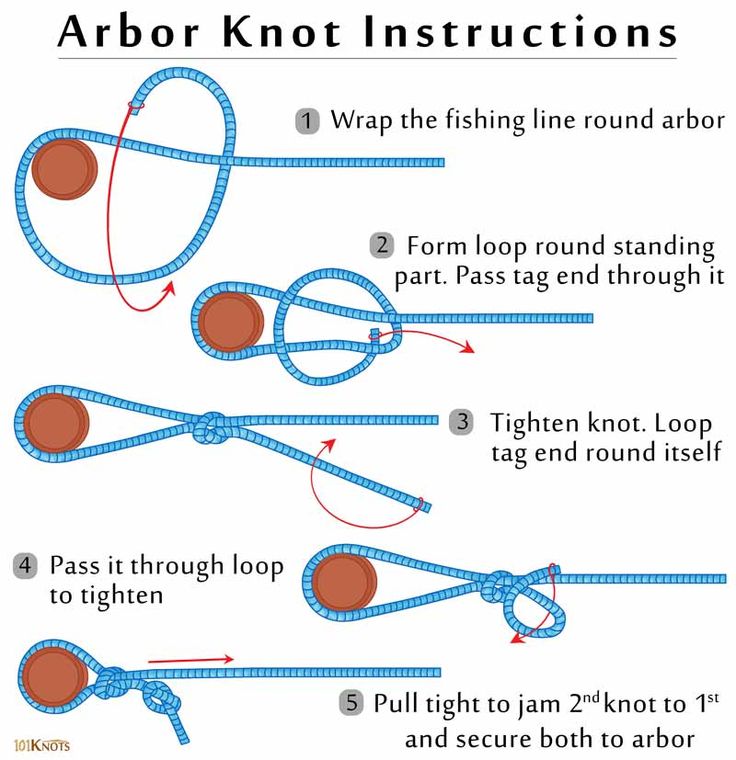
How To Tie An Arbor Knot Fishing Line Knots Knots Camping Knots

The Spool Knot Is Used To Attach The Mainline To The Spool When Attaching Braided Line It S Advisable To Ma Fishing Knots Fishing Hook Knots Saltwater Fishing

Why The Arbor Knot Is Great For Attaching Line To A Reel Fishing Knots Tying Fishing Line Fly Fishing Knots

Pin On Products

Correctly Spooling Fishing Line On Bass Fishing Reels Fishing Tips Fishing Line Bass Fishing

The Spool Knot Is Used To Attach The Mainline To The Spool When Attaching Braided Line It S Advisable To Make Sever Fishing Knots Crappie Fishing Fishing Tips

Hold My Line Holding Drop Shot Hold On Hold Me Fishing Accessories

Fly Fishing Line Leader And Backing Fly Fishing Line Fly Tying Desk Fly Tying Equipment

Post a Comment for "Reel Fishing Line Attach"